Configuration Organizations
Overview
The default organization is created at startup and everything is added to it first. The global admin can later sort everything into the corresponding organizations.
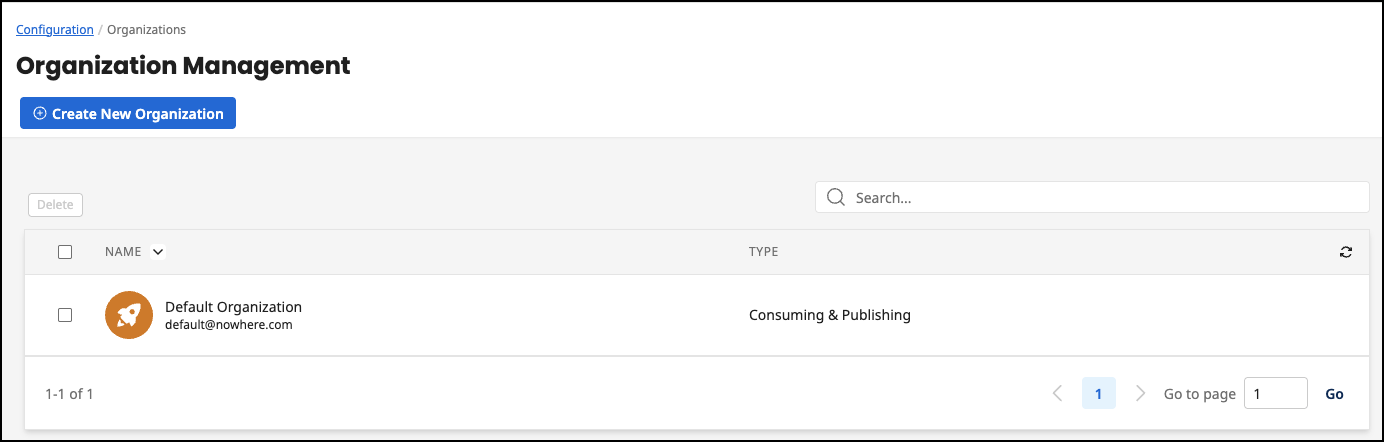
All your Organizations
Here you can see the list of all organizations and the respective type.
Organization Types
There are three types of organizations:
-
Consuming organizations have access only to the Developer Portals. They can not view other organizations.
-
Publishing organizations have access to the Admin and Developer Portals. They can view Consuming and Consuming & Publishing organizations. They cannot view other Publishing organizations and cannot create applications.
-
Consuming & Publishing organizations can view all organizations. They have no restrictions and have access to the Admin and Developer Portal.
Organization Type Visibility
There are several areas in API Control Plane where organizations have limited visibility to other organization types.
| Organization Type | Portal Access | Visible organization types in dropdowns |
|---|---|---|
| Consuming | Developer Portal only | n/a |
| Publishing | Admin and Developer Portal | Consuming & Publishing and Publishing (see below for list) |
| Consuming & Publishing | Admin and Developer Portal | All organizations |
Visible orgs dropdown List
For the Publishing organization, only the Consuming & Publishing and Publishing organizations are visible in the Organizations dropdown field in the following areas:
- APIs > Actions > Create New API - Summary
- APIs > Settings
- APIs > Generate OpenAPI Specification
- API Products > Create New API Product
- API Products > Settings
- Configuration > Developer Portals > Create New Developer Portal > Boomi-managed Portal Details
- Configuration > Developer Portals > Create New Developer Portal > default developer portal > General Info
Settings
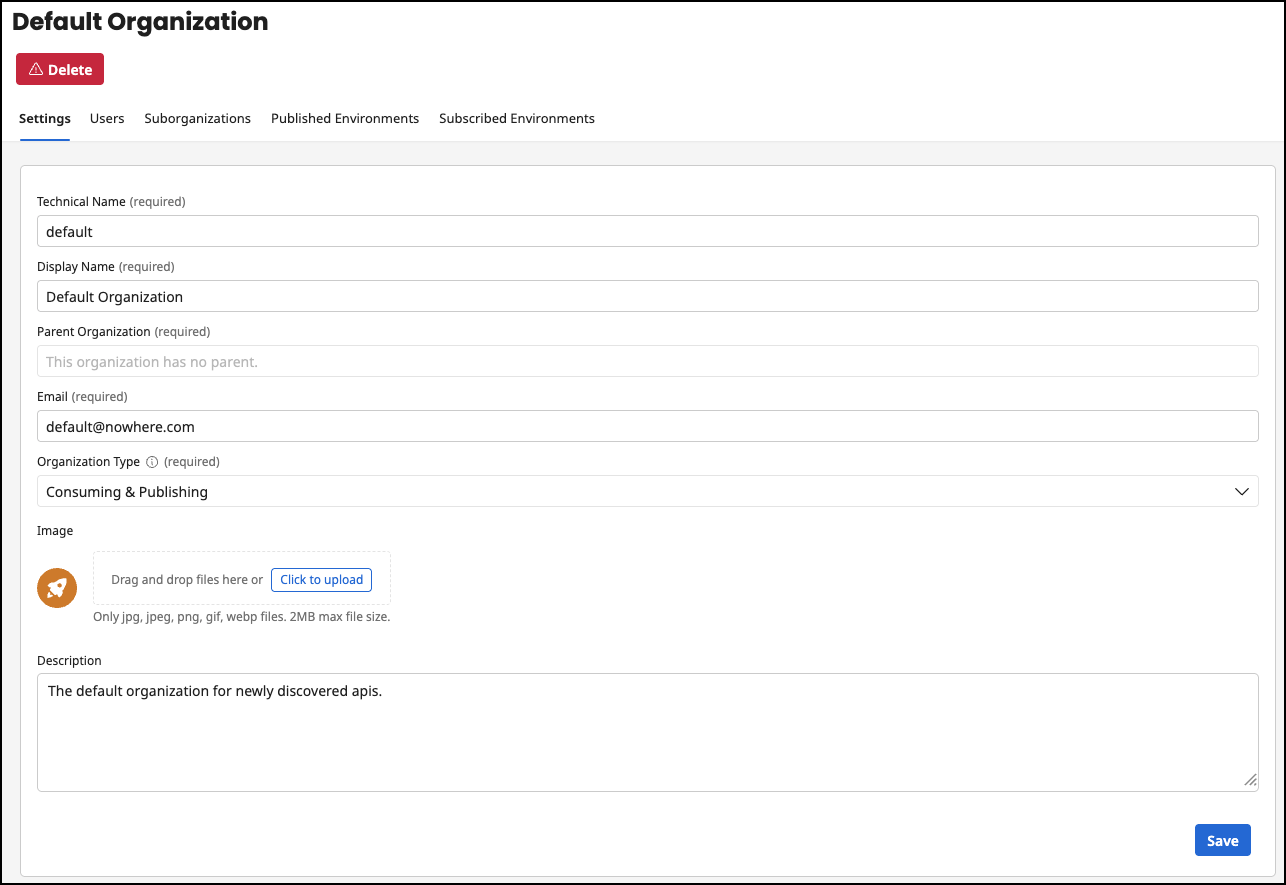
If you select one of the organizations from the table, the individual values of the organization can be viewed and edited in the Settings tab. The organization can be deleted via the button at the top left.
| Settings | Description |
|---|---|
| Technical Name | The technical name of an organization must be unique. |
| Display Name | The display name can differ from the technical name and does not have to be unique. |
| Parent Organization | The parent organization field is read only. The display name of the parent organization is specified here. This field can also be empty. |
| The recipient is understood as the contact person or person responsible. | |
| Organization Type | The organization type controls access rights and visibility in the Admin and Developer Portal. Organizations > Organization Type |
| Image | Image of the organization. |
| Description | Optional text. |
Users
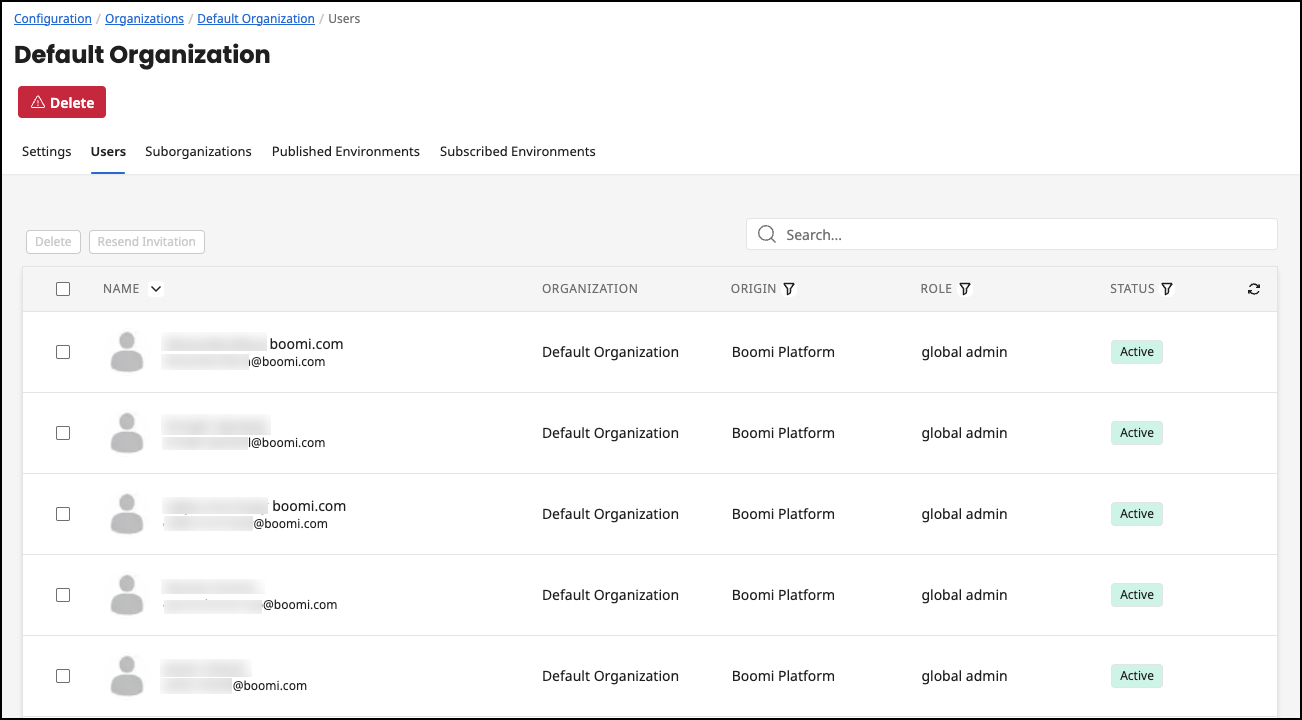
All users of the organization are listed on the second tab Users. Here you can manage the users of the organization. To add a user to an organization refer to Configuration User Management.
Suborganizations
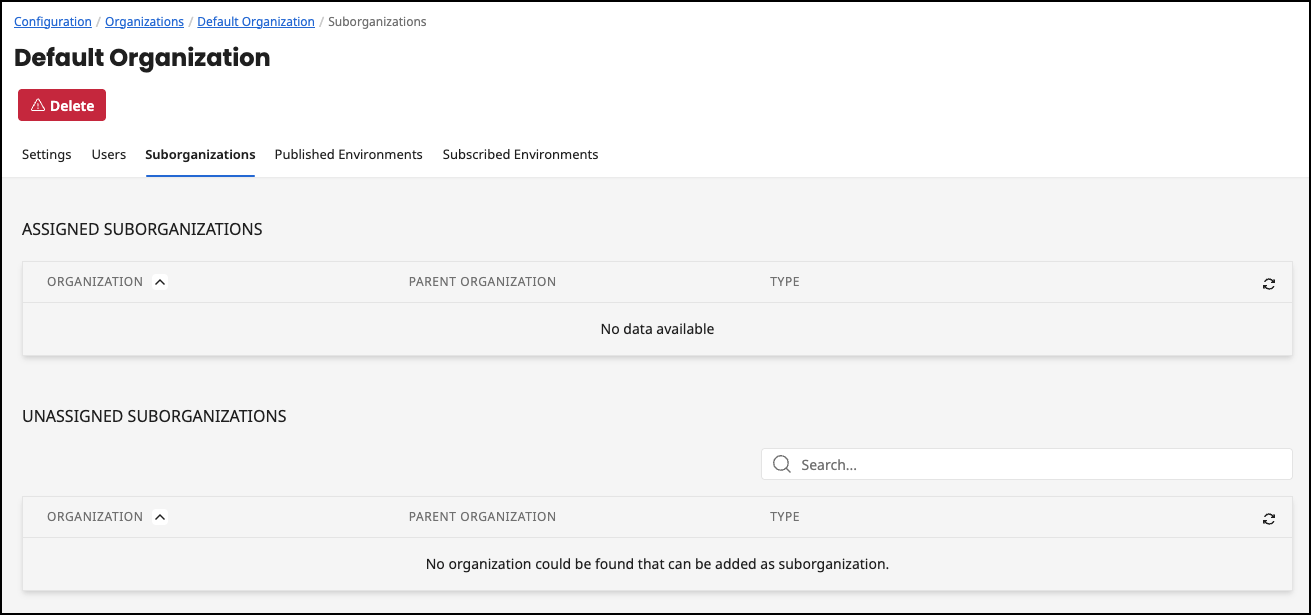
In this view, you can add suborganizations to the current organization. There are two tables within this view:
-
Assigned Suborganizations
- This table contains all organizations that have been added to the current organization.
-
Unassigned Suborganizations
- This table lists all possible suborganizations that can be added to the current organization.
By clicking on the corresponding button in the respective table, organizations can be added to the current organization, assigned, or removed, unassigned.
Published Environments
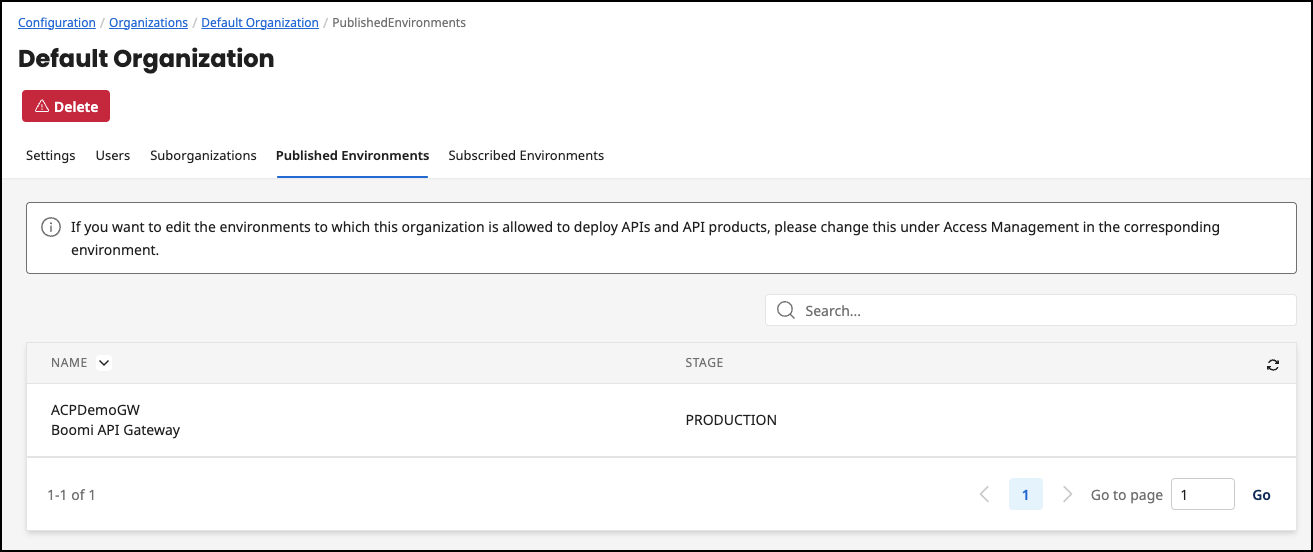
All environments to which a user of this organization is allowed to publish (deploy) APIs are listed here.
Changes to the environments are made in the environments themselves: Environment Access Management
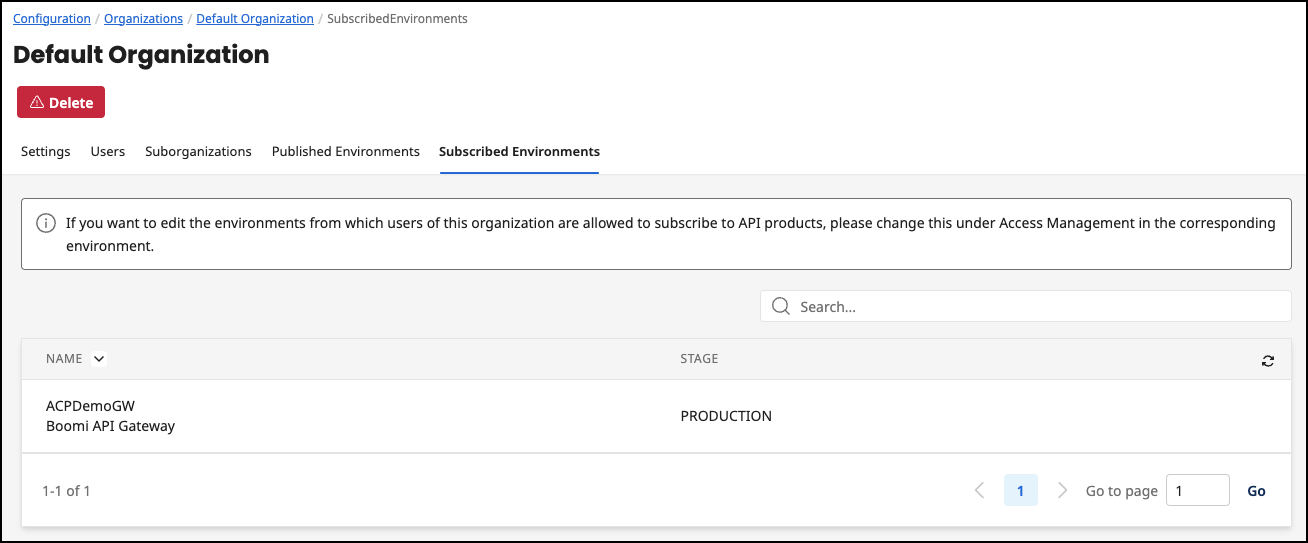
Subscribed Environments
All environments from which a user of this organization is allowed to subscribe an API are listed here.
Changes to the environments are made in the environments: Environment Access Management